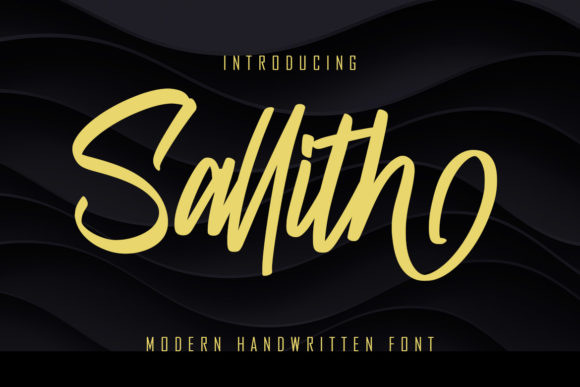
Sallith: The Handwritten Font That Elevates Small Business Branding
Running a small business means wearing every hat. You are the CEO, the marketing manager, the customer service rep, and often the graphic designer too. In this chaotic environment, consistency is not just an aesthetic choice; it is a survival strategy. When your visual identity feels cohesive across your website, your product labels, and your social media posts, you build trust. One of the most effective ways to achieve that professional polish without hiring an expensive agency is by choosing the right typeface.
For many entrepreneurs, Sallith has become a go-to solution. It is a sweet and adaptable handwritten font that brings a natural, human touch to digital and print materials. Unlike rigid corporate sans serifs or overly ornate calligraphy that can be hard to read, Sallith strikes a balance between personality and practicality. Its unique style makes it incredibly fitting for a large pool of designs, allowing brands to stand out while remaining approachable.
Why Personality Matters in Modern Typography
In today’s saturated market, customers do not just buy products; they buy into stories and feelings. A logo designed with a cold, geometric font might convey stability, but it rarely conveys warmth. This is where a creative font like Sallith shines. As a script handwritten typeface, it mimics the flow of real penmanship, which subconsciously signals authenticity and care. For boutique owners, café operators, and handmade product sellers, this human element is crucial.
When you use Sallith, you are injecting a sense of craftsmanship into your brand identity. Whether you are selling organic skincare, custom jewelry, or artisanal coffee, the font acts as a visual cue that says, "This was made with intention." It helps your business look more recognizable because it breaks away from the sea of identical templates found on free design platforms. By selecting a premium font with distinct character, you signal to your audience that you pay attention to detail—a trait they will likely associate with your product quality as well.
Real-World Applications for Every Touchpoint
The versatility of Sallith lies in its adaptability. Because it is PUA encoded, you have access to all glyphs, ensuring smooth integration into various design software. This technical ease allows you to apply the font consistently across all your business touchpoints. Here is how it translates to real-world branding:
- Product Labels and Packaging: For small batch producers, packaging is your silent salesman. Using Sallith for the brand name on a candle jar, a soap wrapper, or a food label adds a layer of elegance. It looks hand-stamped or carefully written, which increases perceived value.
- Social Media Graphics: On Instagram and Pinterest, your thumbnails need to stop the scroll. A bold headline in Sallith against a clean background draws the eye immediately. It works beautifully for quote graphics, promotional announcements, and behind-the-scenes content.
- Digital Advertising: When running ads, clarity is key. Sallith serves as an excellent display font for headlines in web banners. It captures attention faster than standard text, encouraging clicks without sacrificing readability.
- Customer-Facing Materials: Thank-you cards, invoice headers, and email signatures benefit from the personal touch of a handwritten style. It transforms a transactional document into a moment of connection, fostering loyalty and repeat business.
Strategic Font Pairing for Professional Results
One common mistake small business owners make is using only one font for everything. While Sallith is expressive, relying on it exclusively can make your brand feel overwhelming or difficult to read, especially for longer texts. The secret to modern typography is contrast. To create a balanced brand identity, pair your decorative script with a neutral supporting typeface.
A classic and highly effective combination is pairing Sallith with a clean sans serif font. The simplicity of a sans serif provides a stable foundation that lets the handwritten font take center stage. Use Sallith for headlines, logos, and short phrases, and reserve the sans serif for body copy, menus, and detailed descriptions. This hierarchy guides the reader’s eye and ensures your message is clear.
Alternatively, if your brand leans towards a more traditional or literary vibe, consider pairing Sallith with a readable serif font. This combination evokes a sense of heritage and sophistication, perfect for businesses in the publishing, luxury goods, or fine dining sectors. The key is to test these combinations before committing. Look at your logo design alongside your website visuals to ensure the mood aligns with your target customers.
Readability and Practical Testing
Before rolling out Sallith across your entire brand, it is essential to test its functionality in real-world scenarios. A font might look stunning on a high-resolution monitor but fail miserably when printed on a small product sticker. Check how Sallith performs at different sizes. Is it legible on a mobile screen? Can customers read your price list clearly on a printed menu?
Pay attention to spacing (kerning) and weight. Since Sallith is a script font, some letters may connect in ways that reduce clarity if the size is too small. Use it primarily as a headline or accent font rather than a body text font. If you need to write long paragraphs, switch to a more utilitarian typeface. This strategic limitation actually enhances the impact of Sallith, making it pop whenever it appears.
Legal Considerations for Commercial Use
As an entrepreneur, protecting your business is paramount. Not all fonts are created equal regarding licensing. Before using Sallith on any commercial product, packaging, merchandise, or client work, you must verify the license terms. Ensure you have a commercial font license that covers your specific use cases, such as digital downloads, physical goods, and advertising.
Using a font without proper authorization can lead to costly legal issues and damage your reputation. Always keep records of your purchases and review the end-user license agreement (EULA). Investing in legitimate design assets is part of building a sustainable, professional business. It shows respect for creators and protects your brand from unnecessary risks.
Building Trust Through Consistent Design
Ultimately, the goal of using Sallith—or any distinctive typeface—is to build a trustworthy brand. When your materials look polished and intentional, customers perceive your business as established and reliable. Whether you are a startup founder launching your first e-commerce store or a seasoned boutique owner refreshing your look, the right font choice amplifies your message.
Sallith offers a sweet, adaptable solution for businesses that want to appear friendly yet professional. Its natural style bridges the gap between digital screens and physical products, creating a unified experience for your customers. By integrating this handwritten font strategically into your marketing, packaging, and web design, you create a brand presence that is not only seen but felt. In a crowded marketplace, that emotional connection is your greatest asset.